Tribute to Albert Einstein – A Breakthrough in Science
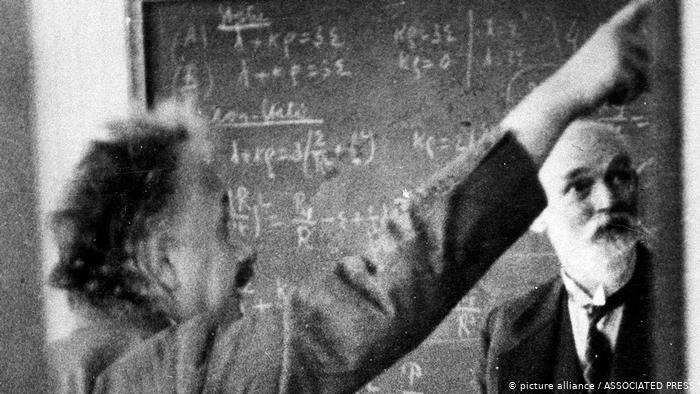
Tribute to Albert Einstein – A Breakthrough in Science
Ever heard of Albert Einstein? The famous German Physicist and Nobel Laureate made some truly huge contributions to the world of Science. His most famous Theory, formulated in relativity, is still enmeshed in our popular vocabulary today as ‘relativity’. Here are just a few things you might not know about Albert Einstein…
Einstein’s most profound contribution to our understanding of light and matter came from his conversion from Classical physics to General Relativity. He began with an assumption that light travels faster than the speed of light in a vacuum. With this new qualification, Einstein began to suggest that perhaps light is a particle rather than an incomplete wave.
Einstein went on to say that no experiment could measure the speed of light, meaning that it would not be possible to travel faster than the speed of light in vacuum. This lead to a chain reaction of ideas, each one challenging the other. First, Einstein proposed that light was a constituent of matter, just like gas or plasma. Next, he postulated that energy itself was a particle and that it consisted of electromagnetic waves.
Einstein then went on to state that time is a kind of dimension, just as light is. He further stated that we only perceive time as a series of definite intervals in time, namely beats per second. Following closely behind was his assertion that gravity is also a kind of dimension, just as light is. Thus, taking all of these ideas into consideration, Einstein came to the conclusion that time and space are three separate dimensions, each distinct yet connected through the action of ‘virtual particles’ in spacetime.
These theories were revolutionary, even though they had not been accepted at first by the rest of the scientific community. Some were inclined to dismiss Einstein’s theory as ‘absurd’, but it has since been fully embraced by nearly every scientist in the field. In addition, many physicists now use Einstein’s theory of relativity to describe how ordinary objects move in space. Thus, clocks and satellites still move around, even when we are not looking.
Einstein spent much of his life trying to understand how science and reality worked. Part of this was working on a unified field theory that would unite all physical theories into one. However, after his death, others soon came to believe that Einstein’s ‘God-consciousness’ had been able to tap into something beyond the natural laws. Consequently, this led to a controversy surrounding his remains, and their supposed links to God. After a long and bitter dispute over this issue, the remains were returned to Germany, where they lay encased in glass boxes.
Einstein’s life and works were truly extraordinary, and he remains, largely, the most important genius of all time. To this day, his influence is far-reaching and is used in the education of school children, as well as those in the military. His theories helped to transform Western culture, and have had a profound impact on many other fields. The big concern with Einstein’s life, however, is that he might have prevented other great minds from pursuing their dream for a better tomorrow. As it is, today we know that had Einstein not been alive, many things we take for granted today might have been very different.
In conclusion, perhaps the most lasting tribute to Einstein, and one that applies to all of us, is that we must always keep an open mind and be willing to listen to ideas that are different from those held by those who are merely “hype.” If someone tells you that something is true because it happened so quickly and dramatically, chances are that it is bogus. It is easy to get caught up in what other people tell you, and become blinded to what is really true. Never be quick to judge, and if you do, remember that sometimes the blind are more able than the seeing.